Mould and humidity in Dubai homes: causes, fixes and prevention
Why mould appears on ceilings, AC grilles and wardrobes in Dubai, how to tell surface mould from a hidden leak, and the habits that keep it away.

In this guide
Dubai is a desert city, so mould surprises many residents. Yet we see it every week: grey spots on bathroom ceilings, black dots around AC grilles, a musty smell in wardrobes, and white fuzz on leather bags stored in a cupboard over summer. The cause is almost always moisture in the wrong place, and once you understand where it comes from, mould is very manageable.
Why a desert city has a mould problem
Coastal Dubai is humid for much of the year. On summer nights humidity can be very high, and even in winter mornings it can be damp. Inside, our homes are cooled hard by air conditioning. When warm, humid air meets a cold surface, such as an AC grille, a window frame, an exterior wall or a cold water pipe, the moisture condenses into water. Where that water lingers, mould grows.
Three other things add to it: bathrooms without good extraction, AC drain lines that overflow inside units, and slow hidden leaks behind walls and under floors.
Where mould usually appears
- Around AC grilles and diffusers: condensation forms where cold air meets warm humid air, especially on ceilings.
- Bathroom ceilings and corners: steam with nowhere to go.
- Inside wardrobes on outside walls: cold walls, still air, stored fabrics.
- Window frames and sills: condensation on cold glass in humid months.
- Behind furniture against outside walls: no airflow.
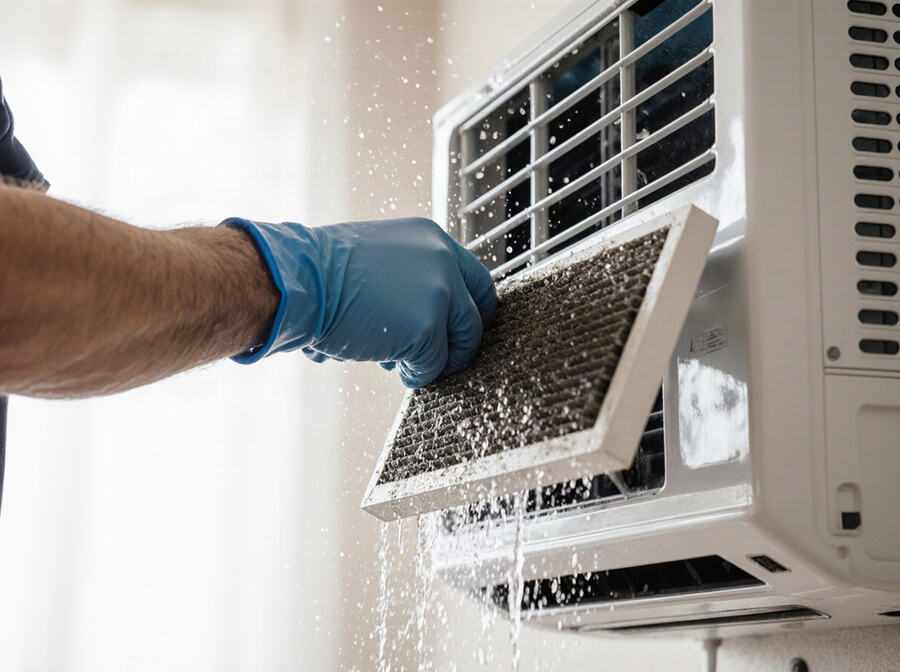
- Inside AC units: on the coil, drain tray and blower, which then blow spores into the room.
Surface mould or a hidden problem?
Not all mould is the same. Small spots on a bathroom ceiling are usually a ventilation problem. Mould that comes back within days, keeps spreading, sits on a damp-feeling wall, or appears with stains, bubbling paint or a musty smell may be a sign of a hidden leak. Check what is behind the wall: a bathroom, a kitchen, a water heater or a riser shaft. If in doubt, a leak detection survey with thermal imaging will tell you without breaking anything.
How to clean small patches safely
- Open windows or run the extractor fan, and wear gloves. A mask is sensible.
- Use a mould and mildew cleaner designed for the surface. On painted walls and ceilings, test a small area first.
- Wipe, do not dry-brush, which spreads spores.
- Let the area dry fully.
- Fix the cause, or it will be back.
Do not mix bleach with other cleaners. On fabrics, wash at the hottest temperature allowed and dry fully in the sun or a dryer. Leather and wooden furniture with mould are best handled by specialists.
If mould covers more than about a square metre, keeps returning, or someone in the home has asthma or a weak immune system, get professional help.
Fixing the causes
AC condensation
AC grilles that drip or grow mould often have a combination of a dirty unit, a partly blocked drain, and air that is too cold for the humidity. A proper AC service cleans the coil and drain. If condensation continues, the ductwork insulation may be damaged, which our technicians can check. Setting the thermostat a degree or two warmer also helps.
Bathrooms
Run the extractor fan during showers and for at least twenty minutes after. If the fan is weak or noisy, have it cleaned or replaced. Leave the door open after showering, squeegee the glass and wipe down tiles. Renew black, mouldy silicone; our handymen do this routinely.
Wardrobes and storage
Leave a gap between furniture and outside walls. Do not overfill wardrobes, use moisture absorbers in closed cupboards over summer, and air stored bags and shoes occasionally.
Leaks
Any leak, however slow, will feed mould. Fix dripping taps, check under sinks for damp, and act quickly on stains. A leak from the apartment above is common in towers; report it to the neighbour and building management with photos.
Homes left empty in summer
Many mould problems start while families are away. With the AC off, humidity rises and condensation forms on everything. Set the AC to around 28 to 30°C rather than off, leave internal doors and wardrobe doors open for airflow, and ask someone to check the home weekly. See our summer travel checklist.
Coastal homes need extra care
Apartments right on the water in JBR, the Marina and the Palm see more humidity and salt. Extractor fans, AC maintenance and regular airing matter more there than inland.
When to bring in professionals
- Large patches, or mould in several rooms.
- Mould that returns within days of cleaning.
- Stains, bubbling paint or damp walls suggesting a leak.
- Musty smells from the AC.
- Mould after water damage from a burst pipe or overflow.
We can trace the moisture source, clean AC units and ducts, treat affected areas, renew silicone and repaint once the cause is fixed. A deep clean afterwards resets the home.
Mould and your health
Most people living with a few spots of bathroom mould feel no effect at all. But mould releases spores into the air, and for some people they matter. Children, older people, anyone with asthma or allergies, and people with weakened immune systems are the most sensitive. Typical reactions include a blocked or runny nose, coughing, itchy eyes and worse asthma symptoms indoors than outside. If symptoms improve when you are away from home and return when you come back, it is worth looking for hidden mould, starting with the AC system and any rooms that smell musty.
This is not medical advice: if you are worried about your health or a family member's, speak to a doctor. Our part is finding and removing the moisture and the mould.
Renting? Who is responsible
In Dubai, tenancy contracts usually make the landlord responsible for major maintenance, and that normally includes leaks and failures in the building fabric, while tenants are expected to ventilate, use extractor fans and report problems promptly. Mould caused by a leak from a pipe or the apartment above is generally not the tenant's fault. If mould appears, photograph it, report it to your landlord in writing straight away, and keep a copy. A professional report showing the cause, such as our leak detection report, helps everyone agree quickly on who fixes what. Contracts vary, so check yours.
Dehumidifiers: do they help?
A portable dehumidifier can help in a problem room, such as a windowless bathroom, a storeroom or a wardrobe area, particularly in humid months. It is not a substitute for fixing a leak or servicing the AC, which already removes moisture from the air when it runs properly. Empty the tank regularly, keep it clean, and aim for indoor humidity of roughly 40 to 60 percent. An inexpensive hygrometer will show you where you are.
A prevention checklist
- Service ACs twice a year and keep drains clear.
- Run bathroom extractor fans and keep them clean.
- Keep indoor temperatures sensible, around 24 to 25°C.
- Leave air gaps behind furniture and in wardrobes.
- Fix leaks quickly and report stains early.
- Do not switch the AC fully off when travelling in summer.
Mould is a symptom. Find the moisture, fix it, and the mould stops coming back. If you are not sure where the moisture is coming from, book a visit: our technicians check the AC, the extraction and the plumbing in one go, and tell you plainly what is causing it and what it will take to fix.
Frequently asked questions
Why do I get mould around AC grilles?
Is black mould dangerous?
Can bleach remove mould?
How do I know if mould means a leak?
General advice for Dubai homes. Anything involving gas, mains electricity or structural work should be done by a licensed technician.